Creating opportunities when you don't know where to start
Networking doesn't have to be cringey. Here's how to do it right.
November 30, 2025

We've all heard it: “Don't wait for opportunities. ✨Create them.✨”
Cool. Love the pep talk. But when you're drowning ghosted applications, rejection emails, and existential dread, that advice feels about as actionable as “just manifest it.”
And if “creating opportunities” makes you picture cold-DMing strangers with “Dear Sir/Madam, please hire me” energy… stop. Breathe. We don't do desperation here.
This is about small, consistent moves that get you noticed in the right way. No cringey elevator pitches. No LinkedIn spam. Just smart, human steps that make people actually want to talk to you.
1. Start with conversations, not desperate pitches
Networking is not begging.
If your first message is “Hey, any jobs?” congratulations, you've just made it awkward.
Instead:
- Reconnect with people you already know
- Send a quick note about a project or post of theirs you actually liked
- Ask for a 15-minute chat to hear about their path or company
- Listen more than you talk
Genuine curiosity is magnetic. Job-hungry energy is repellant. Play the long game.
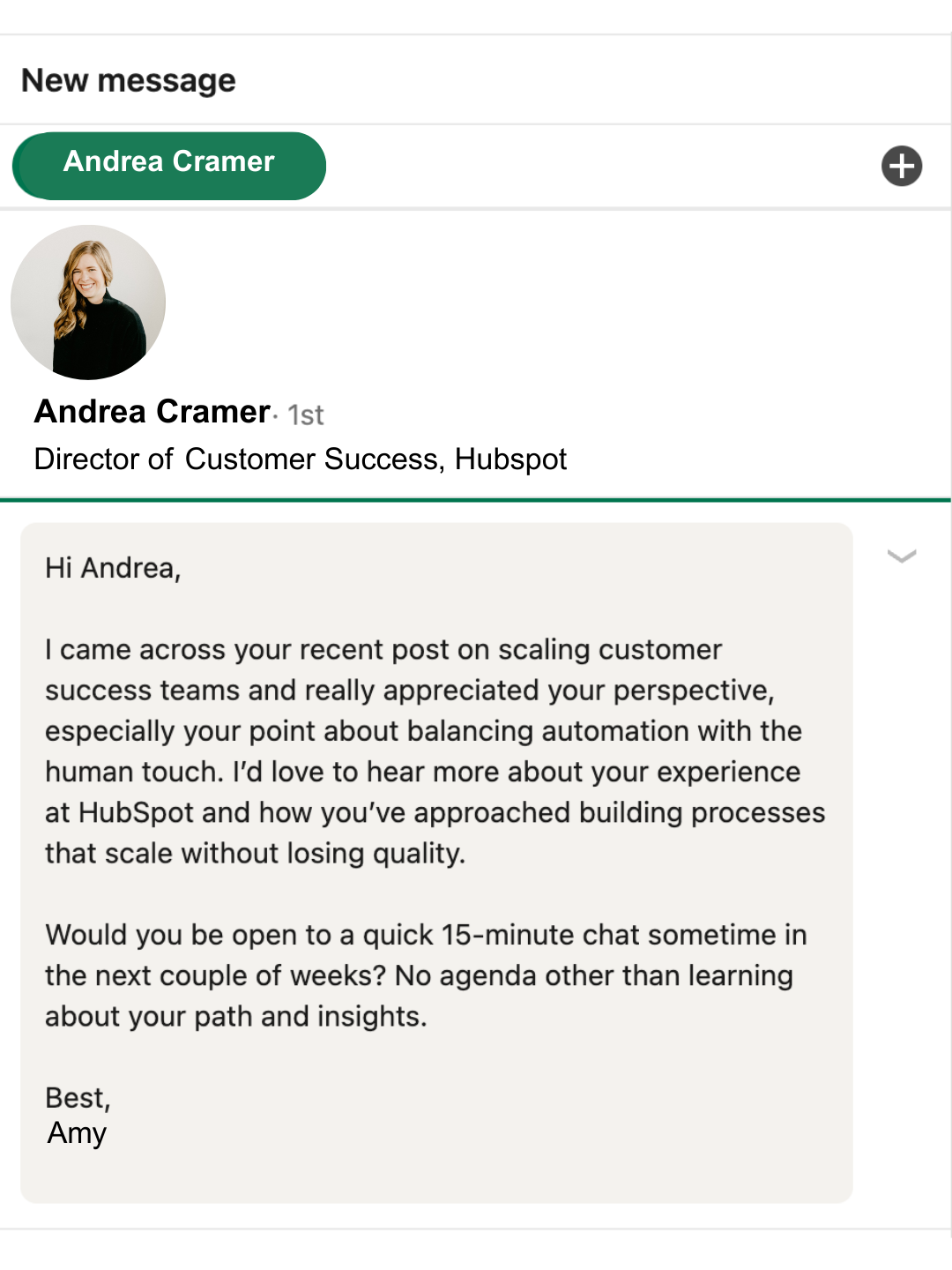
Example LinkedIn outreach. Notice how it focuses on the person, not the job.
2. Show up where your industry hangs out
If no one knows you exist, you're never getting the call-up.
Get in the mix:
- Comment thoughtfully (read: not “Nice post!”) on content from people you respect
- Join relevant Slack groups, forums, or events
- Post your own takes, even if it's just a quick observation or resource
You don't have to be loud. You just have to be present.
3. Follow up without being that person
One message is an introduction. Following up is where trust is built.
That doesn't mean harassing someone every three days. It means:
- Letting them know how their advice helped you
- Checking in on a project they mentioned
- Sending them something genuinely useful or interesting
Following up says “I value this relationship,” not “I'm lurking in your inbox until you hire me.”
4. Play the long game
The best opportunities rarely come from a single brilliant move. They come from being top of mind when the right moment arrives.
Some people you meet now won't be in a position to help for months or years. That's fine. You're planting an orchard, not hunting for one apple.
Measure success by how many strong connections you're building, not how many instant offers you get.
5. Make your profile do the networking for you
If someone stumbles across your LinkedIn, portfolio, or personal site and still has no clue what you do or want, you've just missed a free opportunity.
Your profile should spell out:
- The kind of work or problems you're excited to take on
- The skills and experience you bring
- How to reach you
This isn't just for recruiters. It's so anyone in your network can say “Oh, I know someone who's perfect for that.”
If your storefront sign is blank, people will walk right past.
6. Pitch the role they didn't post
Sometimes the perfect role doesn't exist… yet.
If you see a gap in a company's team, product, or strategy, and you can confidently fill it, make your case:
- Research their challenges, projects, and priorities
- Identify a role or set of responsibilities that could help them win faster
- Frame it as: “Here's what I noticed, here's the value this role could add, and here's why I'm the one to do it”
You're not saying “hire me.” You're saying “here's how you win, and here's how I help you get there.”
Even if they don't make the role right away, you've positioned yourself as a problem-solver, not just another applicant.
Let's wrap it up
You don't have to burn your whole job search playbook. Start with one small move this week, a comment, a DM, an invite. Do it again next week. And the week after.
At Vire, we know the best career moves don't happen because you lucked into the right posting. They happen because you made the right connection at the right time. That's why we're building a future where job seekers and companies find each other through a richer, more human lens, not a stack of resumes.
We're replacing guesswork with clarity, surface-level filters with real fit, and exhausting application cycles with direct, meaningful matches. If you're ready for a job search that actually works for you, we're making it happen.